




Year 8 Line and Shape Art Lessons: Circles and Mandalas
Overlapping circles, intricate dot mandalas and a clay game with its own personality! These Year 8 Line and Shape Art Lessons explore how colour, pattern and layered shapes can draw the eye into an artwork.

Where does your eye go first, and what makes it travel further? Inspired by Wassily Kandinsky and Paul Klee, students investigate how shapes can work together to create rhythm, depth and a strong focal point. A change in colour, tone or placement can shift the whole feeling of a composition.
These Year 8 Line and Shape Art Lessons give students opportunities to explore those relationships through drawing, clay, painting and digital art-making. A music-inspired warm-up introduces the connection between visual pattern and rhythm, inviting students to respond through overlapping shapes and tonal colour.
Circles, Mandalas and a Game of Your Own
Students build compositions in which circles, geometric shapes and radiating lines work together. They consider which forms appear in front, which sit behind and where a focal point will hold attention. Dot mandalas bring detailed pattern into that exploration, combining repetition with choices about size, spacing and colour.
The clay project turns circles into a playable Tic-Tac-Toe board, complete with themed playing pieces. Students can develop their own contrasting sets, giving the finished game a personal character. The project connects careful construction and surface decoration with an artwork they can use.
Painting and digital Studio Work extend the exploration of circles and mandalas in different ways. Students investigate layered forms, flowing colour and shadow effects, bringing their developing skills together in compositions with depth and emphasis. Each medium offers fresh possibilities while keeping the learning connected.
Meet the Artists Behind the Circles
Wassily Kandinsky’s Circles in a Circle invites students to examine how overlapping circles, lines and colour create an energetic composition. Within the full CampFire pathway, students may recognise Kandinsky from Foundation, where a different artwork introduces circles through simpler activities. Year 8 returns to the artist with new questions about arrangement, depth and visual harmony.
Paul Klee’s Fugue in Red offers a contrasting exploration of repeated, overlapping forms. Students compare the artworks and consider how a painting might suggest rhythm or feel connected to music. These ideas provide starting points for their own choices about pattern, movement and focus.
Where This Sits in the CampFire Pathway
This Year 8 unit is one of eleven year-level units in CampFire, the Drawing Toolkit’s connected Line and Shape pathway from Foundation to Year 10. Circles and Mandalas develops students’ understanding of layering, tonal relationships and focal emphasis while encouraging increasingly individual compositions.
Each unit has its own artists, focus and Studio Work while sharing a reliable structure of ten weekly Core Skills mini-lessons, hands-on and digital art-making, quizzes and reflection. Teach Year 8 as a standalone ten-week journey or alongside other year levels in the full CampFire Line and Shape pathway.
Who Are These Year 8 Line and Shape Art Lessons For?
This unit suits Year 8 Visual Arts teachers wanting an engaging, structured art term that develops students’ understanding of composition. Guided activities provide clear starting points, while choices about colour, pattern and game-piece themes give students room to make the work their own.
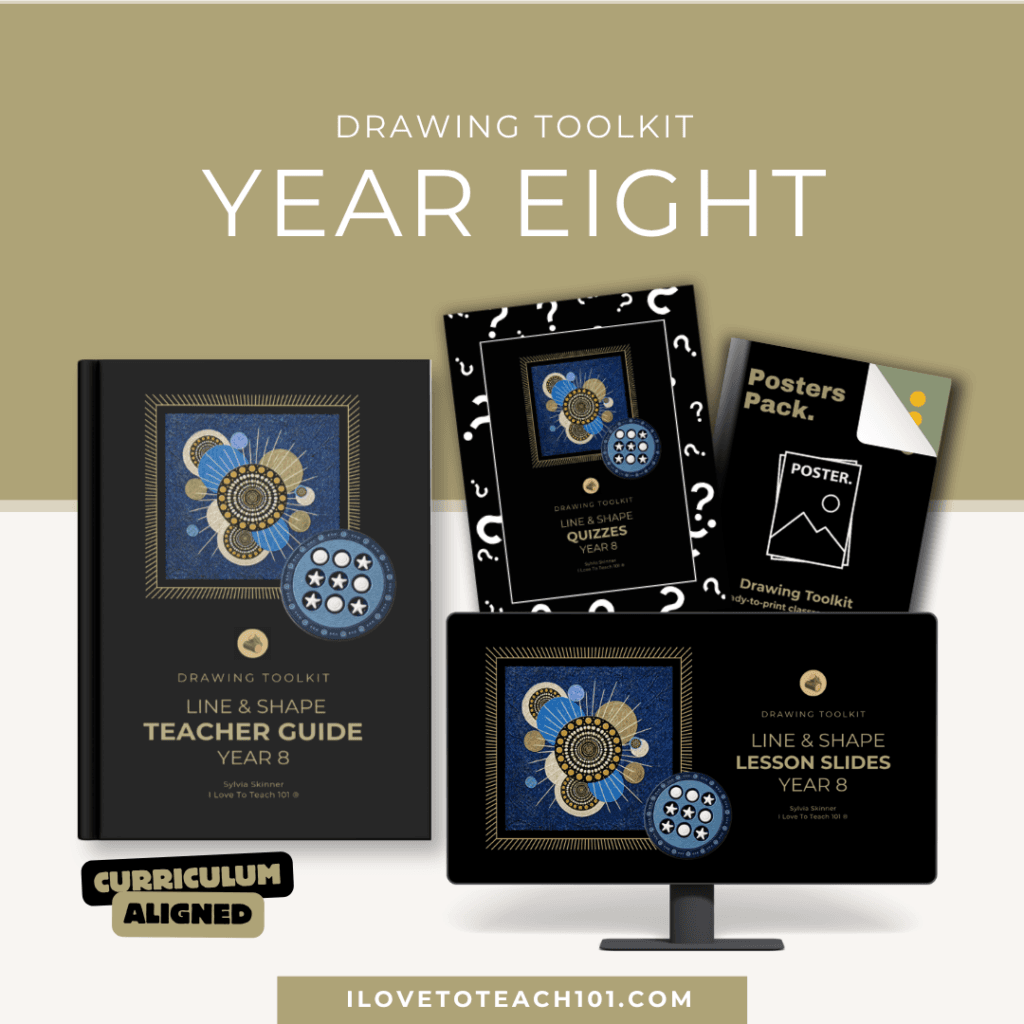
Ready-to-teach lesson slides, a Teacher Guide, a Quiz Book with answers and a Posters Pack are included, together with Australian Curriculum v9 planning support. A printable Tic-Tac-Toe template supports the clay games board project. Shared weekly skills keep the class learning together, while Studio Work allows students to progress at different paces.
Bring circles into conversation with colour, pattern and music, and see what your Year 8 artists create.
Explore other year levels in the full CampFire: Line and Shape collection.

