



Year 6 Line and Shape Art Lessons: Grid Lines
Bold black lines, bright colour blocks and headphones with an artistic twist! These Year 6 Line and Shape Art Lessons turn simple grids into striking designs inspired by Piet Mondrian and Theo van Doesburg.

What happens when you start with just straight lines and a few colours? Students discover how changing the size of a rectangle, the position of a line or the placement of colour can transform a composition. White spaces matter too, giving students plenty to consider as they decide where the eye should travel.
These Year 6 Line and Shape Art Lessons connect those choices with familiar objects and personal interests. Through drawing, clay, painting and digital art-making, students explore how a recognisable grid style can take on a different character in each new design.
Grid Lines with Personality
The unit begins with straight lines, rectangular shapes and bold colour choices. Students explore grids within different outlines, considering how filled sections and open spaces work together. Comparing crossing lines with separated rectangles helps them discover how small changes in arrangement can create a different sense of balance or movement.
Studio Work gives those ideas a practical and personal setting. Students decorate a pair of clay tumblers with Mondrian-inspired squares, then explore a mobile-device painting that makes room for an image of something they love. The shared grid theme holds the learning together while leaving space for individual choices.
Digital activities develop confident line work, colour placement and shadow effects. Students apply their growing skills to initials and other compositions before creating their own Mondrian Grid Headphones. It is a playful connection between an artist’s ideas and objects students’ recognise from everyday life.
Meet the Artists Behind the Grids
Piet Mondrian’s Composition with Red, Blue and Yellow gives students a clear starting point for exploring the relationship between black lines, white space and blocks of colour. Looking closely encourages them to notice that a limited set of shapes and colours still allows many decisions about balance and arrangement.
Theo van Doesburg’s Rhythm of a Russian Dance offers a lively comparison through separated vertical and horizontal forms. Students consider how the two artists use similar visual ingredients to create different effects, then explore those possibilities in their own work.
Where This Sits in the CampFire Pathway
This Year 6 unit is one of eleven year-level units in CampFire, the Drawing Toolkit’s connected Line and Shape pathway from Foundation to Year 10. Grid Lines develops students’ planning, colour placement and compositional choices as they approach secondary art.
Each unit has its own artists, focus and Studio Work while sharing a reliable structure of ten weekly Core Skills mini-lessons, hands-on and digital art-making, quizzes and reflection. Teach Year 6 as a standalone ten-week journey or alongside other year levels in the full CampFire Line and Shape pathway.
Who Are These Year 6 Line and Shape Art Lessons For?
This unit suits Year 6 classroom teachers wanting a ready-to-teach, well-structured art term with a strong graphic focus, as well as Visual Arts specialists developing students’ confidence in composition. Clear starting points support careful construction, while familiar objects and personal imagery give students a reason to make each design their own.
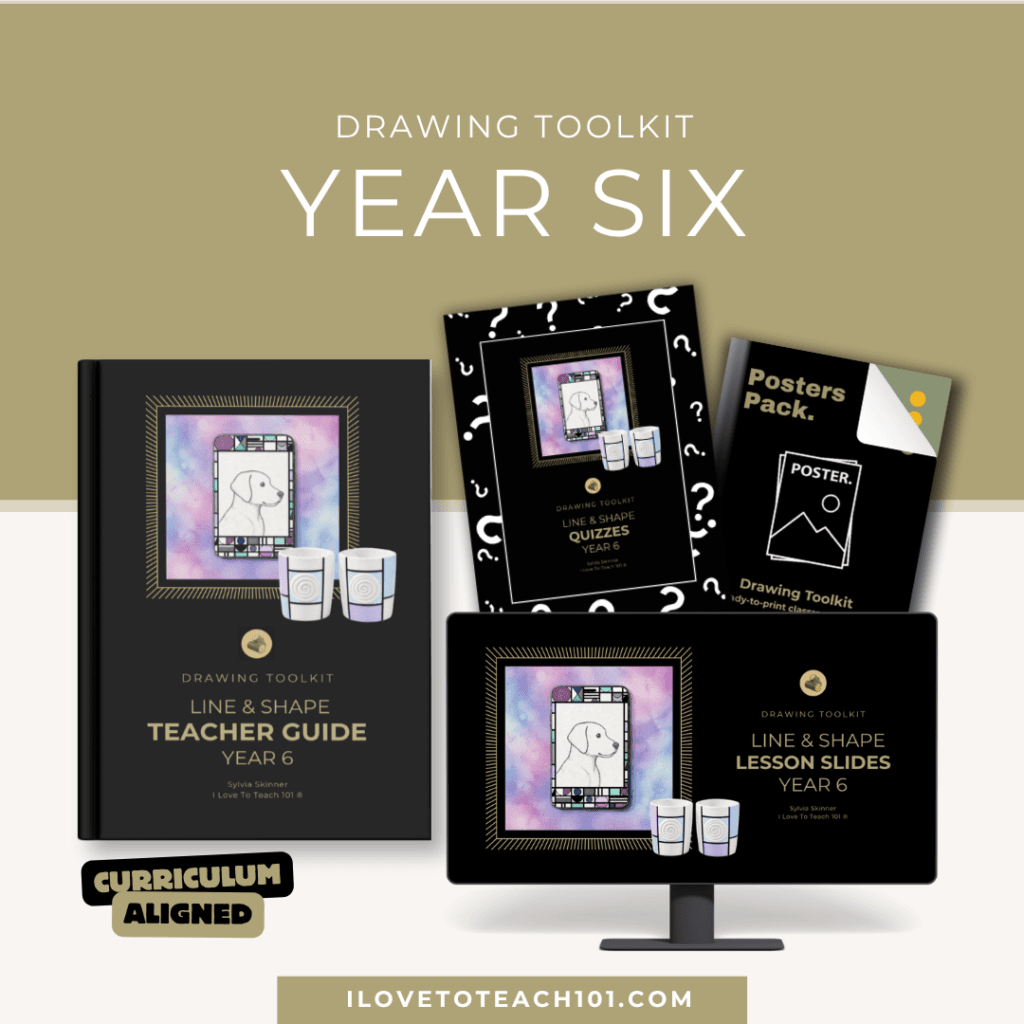
Ready-to-teach lesson slides, a Teacher Guide, a Quiz Book with answers and a Posters Pack are included, together with Australian Curriculum v9 planning support. Shared weekly skills keep the class learning together, while Studio Work allows students to progress at different paces.
Start with a straight line and see where your Year 6 artists take it.
Explore other year levels in the full CampFire: Line and Shape collection.

